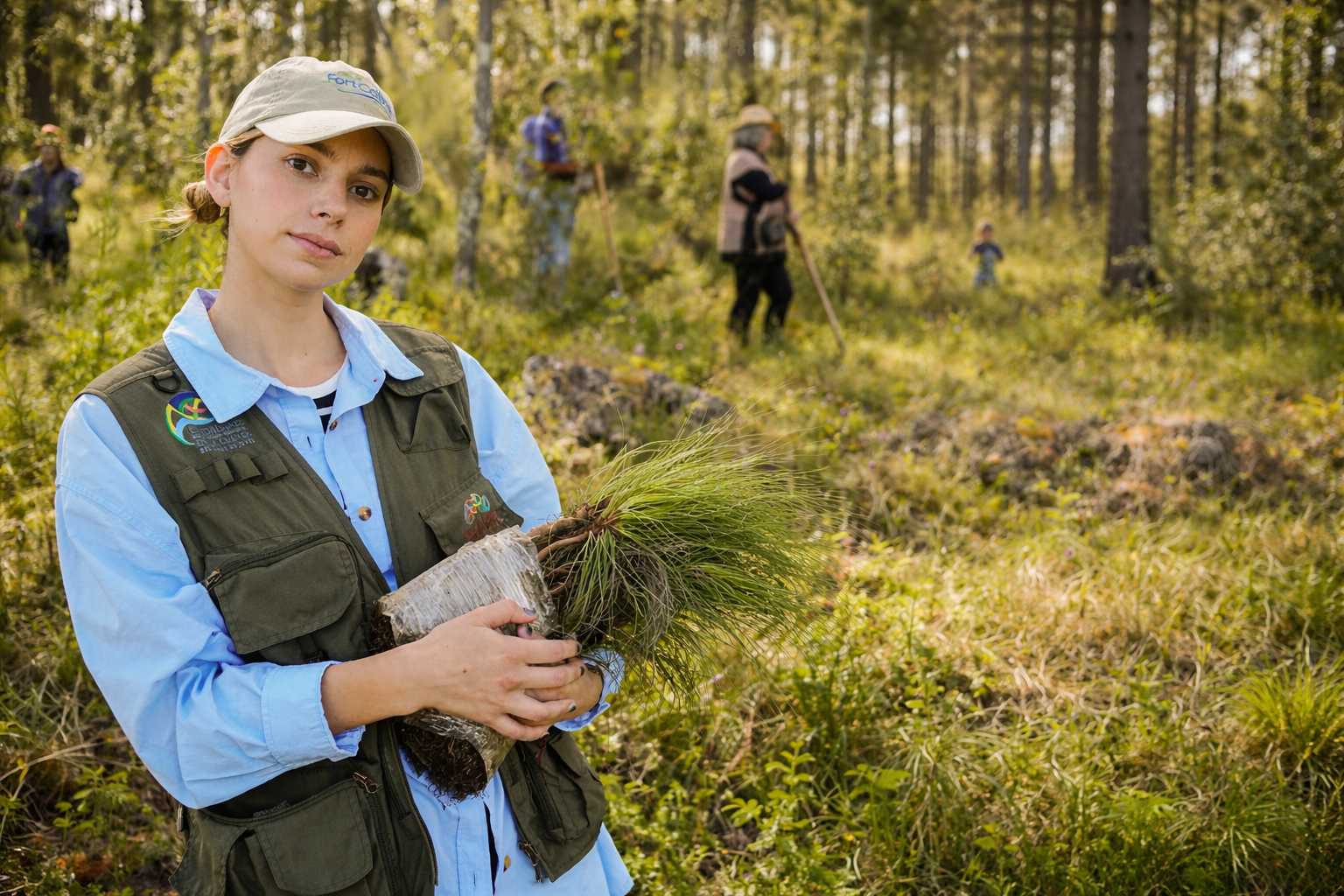
From Your Forest A.C. and the Tu Bosque Movement , we carried out a bromeliad reintroduction workshop and an environmental action day in the mountain area preserved by Pablo Neruda Telesecundaria in San Cristóbal de las Casas, Chiapas, together with first-year student groups.
🌱 Why reintroduce bromeliads?
Bromeliads are epiphytic plants that grow on trees without harming them. They play fundamental ecological roles:
- 🌧️ They capture and store rainwater
- 🐸 They create microhabitats for insects, amphibians, and other organisms
- 🌳 They contribute to the balance of the cloud forest
- 🌿 They increase the structural biodiversity of the ecosystem
In many areas, extraction, forest degradation, and land-use change have reduced their presence. Reintroducing them is a concrete action to restore ecological processes.
👩🏽🏫 Environmental Education Through Experience
During the workshop, students:
- Learned about the ecological role of bromeliads
- Practiced proper placement and care techniques
- Reflected on the importance of conserving mountain ecosystems
- Actively participated in the reintroduction process
These kinds of experiences generate something deeper than information: they create awareness and a sense of belonging. When a young person understands that the forest is not just scenery, but a living system, their relationship with the territory begins to change..
Cuando una y un joven comprende que el bosque no es solo paisaje, sino sistema vivo, comienza a cambiar su relación con el territorio.
🌎 More Than Planting Trees
At Your Forest, we promote actions that integrate ecological restoration and community education. It is not only about planting, but about restoring the connection between people and nature.
Each bromeliad reintroduced is a reminder that conservation begins locally—at school, in the nearby mountain, through direct experience.